Planning a driveway in Greensboro and the Triad

Concrete vs. Gravel Driveways: What Fits Your Property?

You know you need a driveway that works for everyday use, but you are not sure if concrete or gravel is the better fit. The choice is less about what looks good in a photo and more about your land, traffic, maintenance preferences, and budget. This page walks through how concrete and gravel actually differ, what matters most beneath the surface, and how to move from a rough idea to a buildable plan.

Main website image
The short answer

What matters most

Neither concrete nor gravel is automatically “best” for every driveway. Both can work when the driveway is properly planned and the base is well built. Concrete is a good fit if you want a smooth, stable surface with a more finished appearance and less frequent routine maintenance. It is often chosen near homes, garages, and main entrances where clean access and appearance matter. Gravel is a good fit if you want a driveway in place quickly, expect to adjust its layout over time, or need to manage the project within a tighter upfront budget. It is common on longer drives where preparing a solid base is the priority and the exact surface finish is less critical. In either case, excavation, grading, compaction, and drainage under the surface have more impact on how long a driveway lasts than the top material alone. A site‑work contractor can evaluate your property, design the base and drainage, and prepare the driveway route so that concrete or gravel has the support it needs to perform well.

Concrete and gravel driveways can both work well when they are supported by solid excavation, grading, compaction, and drainage.
Concrete tends to offer a smoother, more finished surface with less frequent routine maintenance, while gravel provides flexibility and can suit longer or evolving driveway routes.
Slope, driveway length, traffic, and water movement across your property are key factors in choosing between concrete and gravel.
Budget decisions are most useful when they account for necessary site preparation, not just the visible driveway surface.
Apex Excavating & Construction Services brings over 30 years of site‑development experience in the Greensboro and Triad area, providing the excavation and related site work that driveways depend on.
Main website image
A useful way to think about it

Key differences between concrete and gravel driveways

When you look past surface appearance, concrete and gravel driveways differ in how they are built, how they feel to use, and what they ask of you over time. Understanding these basics makes the rest of the decision much clearer.

What is happening under the surface

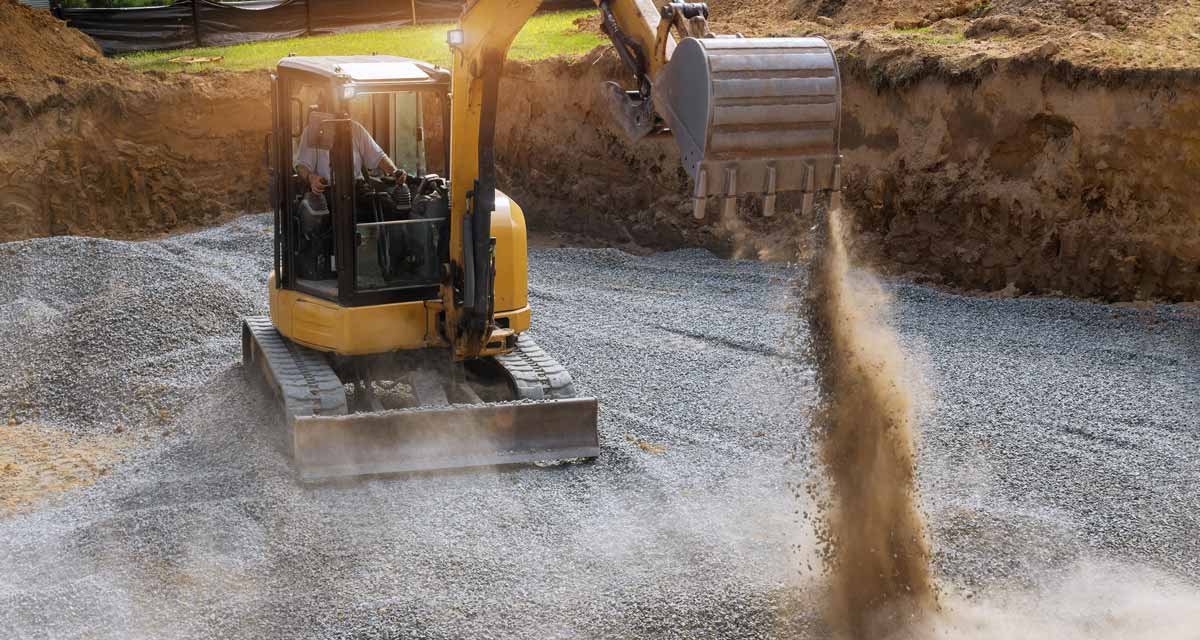
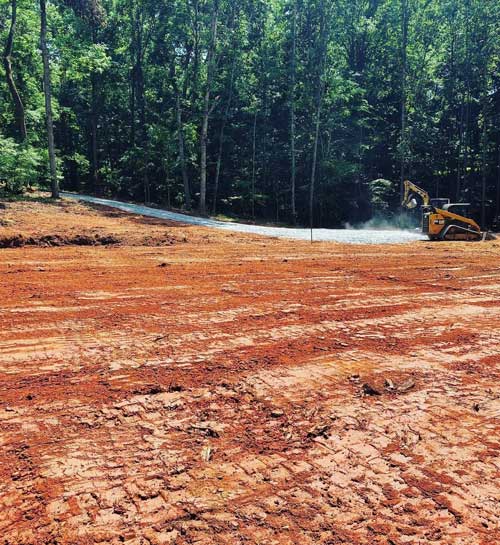
Both concrete and gravel rely on a stable, well‑drained base. For either option, the driveway route is excavated to the required depth, the subgrade is shaped, and the soil is compacted. A layer of stone is then placed and compacted to create a uniform base. Concrete is installed as a rigid slab on top of that base, while gravel remains a flexible layer that can shift and be regraded. If the base is thin, poorly compacted, or does not drain, both materials will struggle. Concrete can crack or settle unevenly, and gravel can rut, wash out, or develop soft spots. The quality of excavation and grading work is what allows the surface you choose to perform over the long term.

How each driveway feels day to day

Concrete offers a smooth, consistent surface. It is easy to walk on, roll carts or equipment across, and keep clean. Snow and debris can be shoveled or swept with less effort, and the defined edges can make parking and walking paths more predictable for everyday use. Gravel has more texture underfoot and under tires. Some people like the audible crunch as vehicles arrive and the more relaxed, informal look. Others find that loose stone makes it harder to move wheeled items or keep the surface tidy. Thinking about who uses the driveway, how often, and what they move across it will help you decide which feel is a better fit.

Maintenance over the life of the driveway

Concrete typically needs less frequent routine attention. Over time, you may see some cracking or surface wear, but day‑to‑day care usually focuses on keeping the surface clean and watching for changes that might signal a drainage issue nearby. Gravel is simpler to adjust but requires more regular involvement. Stone can shift or be displaced by traffic and weather, so it is normal to rake, regrade, or add material periodically to fill low spots and keep the surface even. If you prefer minimal ongoing work and fewer touch‑ups, concrete may fit your expectations better. If you are comfortable with occasional reshaping and adding stone, gravel can be a practical choice.

Decision guide

How to choose the right driveway for your property

Once you understand how each material behaves, you can match those traits to your land, traffic, and plans. Use these checkpoints to narrow your choice before you talk with a contractor about site preparation and construction.

Look at slope, length, and how you use the driveway

The layout of your driveway route is a major factor. Steeper or sharply curved driveways can be harder to keep in shape with loose stone, since gravel can move downhill or to the outside of turns. A rigid concrete surface can hold its shape in those situations when the base is prepared correctly. Very long driveway runs can be more cost‑sensitive, which is one reason many property owners consider gravel for those distances. Also think about the kind of traffic the driveway will see. Occasional passenger vehicles place different demands on the surface than frequent deliveries, trailers, or equipment. Matching the surface to slope, length, and traffic leads to a more durable result.

Consider water and nearby improvements

Water management is as important as material choice. Concrete sheds water to the sides, so the grading around the slab and any drainage features must carry runoff away from buildings, walkways, and other improvements. Gravel can allow some water to move through the surface, but concentrated runoff can still displace stone and erode the base. If water already moves across your property in visible paths after storms, or you have low areas near where the driveway will run, those conditions should be evaluated before you commit to a surface material. Integrating grading and drainage into the driveway plan helps protect foundations, landscaping, and adjacent paving.

Think about how stable your layout is

If your site is still evolving, with future buildings, parking areas, or access points likely to change, you may want flexibility. Gravel driveways are easier to realign, extend, or narrow as those plans take shape, provided the base is adjusted to match. On properties where the layout is already well defined, and the driveway location is unlikely to change, many owners prefer to invest in a more finished surface. In both situations, it helps to sketch the full layout of current and planned structures, utility routes, and parking so the driveway can be planned around them from the start.

Set a realistic budget and share it with your contractor

Driveway costs vary with site conditions, access, and the amount of preparation required, so broad price ranges found online can be misleading. A practical approach is to decide on a budget range you are comfortable with, then ask your contractor what they can build within that range. Ask them to explain how much of the budget goes to excavation, grading, and drainage versus the driveway surface itself. That conversation helps you see the tradeoffs between a smaller, well‑built concrete drive and a larger gravel drive with the same level of base preparation, for example, and keeps your decision grounded in what is realistic on your particular property.

Evidence and expectations

How Apex Excavating & Construction Services supports your driveway project

Concrete and gravel are only as reliable as the ground they rest on. Apex Excavating & Construction Services focuses on the excavation, grading, drainage, and broader site work that driveways depend on.
More than 30 years focused on site development

Published company information notes that Apex Excavating & Construction Services has over 30 years of experience in residential and commercial site development, excavation, and grading. That experience matters for driveways, because issues such as soft spots, inconsistent subgrade, and poor drainage are often what cause premature failure. An experienced site contractor knows how to recognize and correct those problems before any driveway surface is installed.

Services that support driveway success

The company’s documented services include land clearing, grading and leveling, drainage solutions, site development, underground utility installation, and related excavation work for residential and commercial properties in the Greensboro area and across the Triad. Driveways are closely tied to these services: trees or old structures may need to be removed, grades must be set so the drive ties into building pads and roads, water must be directed away from improvements, and utilities may cross the route. Having a contractor who can coordinate this work around your planned driveway helps reduce gaps between trades and supports a more dependable result.

Established presence in Greensboro and surrounding counties

Apex Excavating & Construction Services is based in Stokesdale, NC and serves Greensboro, the broader Triad area, and Forsyth County with excavation and site work. Focusing equipment, crews, and scheduling around these communities allows the company to work within local site conditions and regional requirements. That local presence supports more grounded recommendations on grading, drainage, and other preparation that your driveway will depend on.

Main website image
Main website image
Local context · Stokesdale, NC

Thinking about concrete or gravel in Greensboro and the Triad

Driveway decisions in and around Greensboro often come down to how the driveway ties into the rest of the property. In town, drives may be shorter and connect to garages, parking areas, or walkways on compact lots. Outside city centers in places like Stokesdale and other Triad communities, driveways may run longer distances from the road and cross more varied terrain. Because Apex Excavating & Construction Services is based in Stokesdale, NC and serves residential and commercial customers in Greensboro, the broader Triad area, and Forsyth County with excavation and related site work, they are set up to handle driveway‑related site preparation in this region. That regional focus means they are used to coordinating grading, drainage, land clearing, and utility installation so a driveway can be integrated into the rest of the site plan, whether you ultimately choose concrete or gravel as the surface.

Questions worth asking

Concrete vs. gravel driveway: common questions

Once property owners start comparing concrete and gravel, the same questions tend to come up about performance, timing, and planning. These answers give you enough detail to have a focused conversation with a site‑work contractor or driveway installer.

Is concrete always better than gravel for a driveway?

Concrete is not automatically better; it is simply different. It provides a smooth, more finished surface and usually requires less frequent routine maintenance, which many property owners like near homes and main entrances. Gravel can be a better fit where flexibility, longer runs, or tighter upfront budgets are priorities. The better option is the one that matches your layout, traffic, and willingness to handle maintenance, supported by a well‑built base either way.

Can I start with gravel and change to concrete later?

Many property owners plan for that possibility. If you expect to upgrade to concrete at some point, it is important to build the initial gravel driveway with good structure: appropriate excavation, grading, and compaction. When you later decide to pour concrete, a contractor will still evaluate and adjust the base, but starting with a properly built gravel drive can help that transition. Mention your long‑term plans early so the route, width, and elevations are set with future changes in mind.

How long does it usually take to build a driveway?

Timeframes depend on driveway length, access for equipment, and how much preparation is needed. Gravel surfaces can often be placed and compacted relatively quickly once the route is cleared, graded, and drained. Concrete driveways involve additional steps such as forming, placing, finishing, and curing before regular traffic is allowed. In both cases, work like land clearing, grading and leveling, and drainage improvements can represent a significant portion of the schedule and should be discussed as part of your estimate.

What should I ask a contractor before I choose a driveway surface?

Instead of starting with, “Should I pick concrete or gravel?” ask how they plan to prepare your site. Helpful questions include: How will you handle drainage and water runoff along the driveway route? What depth and type of base will you use? How will you deal with soft or unstable soils if you find them? How will the driveway connect to existing roads, buildings, and utilities? The answers will show you whether the contractor is focused on the long‑term performance of the driveway, not just the surface material.

Can a gravel driveway look finished, or will it always feel temporary?

A gravel driveway can look intentional when it is planned and maintained carefully. A clearly defined route, appropriate grading, and consistent stone size all help the driveway read as part of the property rather than an afterthought. While it will not have the continuous, smooth appearance of concrete, many owners find that a well‑kept gravel driveway fits their setting and use just as well, especially on larger or more informal properties.

Your next step

Next step: get your driveway site evaluated

If you are deciding between a concrete or gravel driveway, an on‑site review is the most useful next step. Seeing the route, access, and surrounding improvements in person allows a contractor to recommend realistic options. Apex Excavating & Construction Services provides land clearing, grading and leveling, drainage solutions, site development, underground utility installation, and related excavation services for residential and commercial properties in Greensboro, the Triad area, and Forsyth County. They can review your planned driveway path, look at how water currently moves across your land, and explain what base and drainage work would be needed to support a new or upgraded driveway. To start that process, call 336-314-0272 or use the contact form on their website to request a site review. Having a rough idea of your preferred driveway route and future building or parking plans will help turn that visit into a practical plan you can move forward with.

Main website image