Site readiness decisions, made clearer

Questions That Clarify Your Need for Site Development

You know your property needs work before anyone can build on it. But do you need full site development, or a smaller scope like grading or utilities only? This guide gives you practical questions you can walk through on your own or with a contractor so you can see, in concrete terms, whether comprehensive site development fits your project or if another path makes more sense.

Main website image
The short answer

What matters most

The most useful questions for deciding whether site development is the right fit are the ones that show how closely the proposed scope, process, timing, responsibilities, limitations, and finished condition match your real project. Ask what “ready to build” means for your site, which work must happen before construction can start, how clearing, grading, drainage, and utilities will be handled, who is responsible for each step, and what could delay or limit that work. When the answers line up with your goals and constraints in writing, full site development is more likely to be a good fit. If they do not, you may need to adjust the scope or consider a narrower phase of work.

Start by defining your own version of “ready to build,” then compare your current site to that picture to see how much work is truly required.
If your project calls for coordinated clearing, grading, drainage, and underground utilities, you are likely in full site development territory, not just basic excavation.
Honest assessment of slopes, trees, existing structures, and current drainage patterns will reveal whether you need broad site work or only targeted services.
Use your answers to ask sharper questions about scope, responsibilities, timing, and limitations when you speak with site development contractors.
Local conditions and regional requirements in Greensboro, Forsyth County, and the broader Triad should factor into whether full site development or a phased approach is the best fit for your property.
Main website image
A useful way to think about it

A practical question framework for site development fit

Instead of starting with equipment or cost, start with clarity. These questions help you test whether full site development fits your property and plans, or if you are better served by a narrower phase of work.

Start with the end state: What does “ready to build” mean for you?

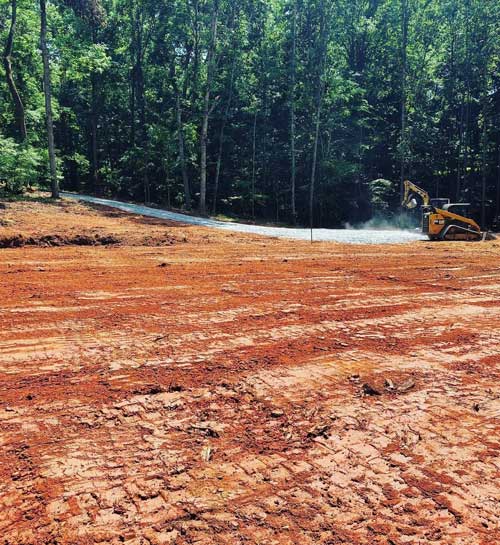
Before you decide if you need full site development, get clear on what “done” looks like. Are you trying to reach a point where your builder can immediately start foundations, or only to clear access and rough in a driveway? Do you need the entire parcel shaped and drained, or just the building pad and immediate surroundings? Will utilities be fully installed and ready for connection, or only brought to a certain point? Write down, in plain language, the condition you expect the land to be in on the day site work is considered complete. If that end state requires coordinated clearing, grading, drainage, and utilities, you are probably in site development territory rather than a one‑off service.

Clarify what is being built and where it will sit

Site development exists to serve a structure or site plan. Without that, it is hard to tell what scope you truly need. Note what you are building, where it will sit on the property, and what else must be accessed such as driveways, parking, outbuildings, or future phases. Ask yourself whether the building location is locked in or still flexible. If you can still move a building or driveway slightly to work with existing grades, trees, or utility routes, you may be able to reduce the amount of heavy site work. If the layout is fixed because of design or other constraints, the need for more complete site development becomes more likely.

Examine your current site conditions honestly

Next, question how far your property is today from the end state you described. Is the land wooded, overgrown, or already somewhat open? Are there existing structures, slabs, or old driveways that must be demolished or removed? How steep is the slope from one end of the build area to the other, and does water currently drain away from where the building will go? Are utilities nearby at the road, already on the site, or not present at all? Properties that are heavily treed, uneven, or lacking basic utilities typically benefit from integrated site development, while relatively flat, cleared lots with existing connections might only need targeted grading or utility trenching.

Decision guide

Turning your answers into a clear path forward

Once you have walked through the questions, your notes can point directly to next steps. Use this section to translate your answers into action: what to ask a contractor, what to document, and what to hold off on for now.

Do your answers point to full site development or a smaller scope?

Look back at your notes. If your project requires multiple coordinated steps such as land clearing, removal of old structures, broad grading, drainage improvements, and installation of underground utilities to reach the end state you wrote down, you are describing full site development. In that case, you will want a contractor comfortable managing those pieces as one plan. If, instead, you identified a few limited needs like refining an already‑cleared building pad or tying into existing utilities nearby, a narrower service such as grading and leveling or underground utility installation alone might be enough. The key is that the work you authorize matches the gap between your current site and your definition of “ready to build,” not a generic package of tasks.

What information should you organize before calling a contractor?

Good contractors make better recommendations when you come prepared. Take the answers you have gathered and organize them into a simple bundle: a written description of what you are building and when you hope to start, a sketch or copy of any plans showing building and driveway locations, and notes on slopes, wet spots, trees, or existing structures. Add any constraints you discovered such as easements, tight access, or neighbors close to the property line. Having this information ready lets a site development contractor in the Triad quickly tell you whether full site preparation is appropriate, suggest phasing, or confirm that a smaller scope is enough for your current goals.

Questions to ask a contractor to test fit and alignment

Once you speak with a potential contractor, use targeted questions to see how well they understand and match your needs. Ask them to describe, in their own words, the finished condition they will deliver for your property and how that lines up with your definition of “ready to build.” Request a breakdown of which tasks they will handle—land clearing, grading, drainage, utility trenching and installation—and which responsibilities stay with you or other providers. Ask what site information they still need, what they see as the biggest risks or limitations on your lot, and what could change the schedule or scope. Their answers should be specific to your property and give you more confidence in either moving forward with site development or narrowing the work.

How to decide on timing and phasing

Your schedule may strongly influence whether full site development is the right move. If you have firm deadlines driven by permits, a builder’s schedule, or financing, ask each contractor how far in advance they need a signed agreement before mobilizing, and which prerequisites such as surveys, approvals, or tree decisions must be in place first. If your timeline is flexible, explore whether phasing makes sense, such as clearing and rough grading first, then final grading and utilities closer to building start. Use your earlier answers about site conditions and end state to guide this conversation, so that any phasing still results in a coherent, build‑ready site rather than a series of disconnected tasks.

Evidence and expectations

How experience and scope affect the fit

Site development is high‑impact work. Proven experience and clear service scope can help explain whether a contractor is equipped to handle complete site preparation for your kind of project.

Why experience matters for complex site development

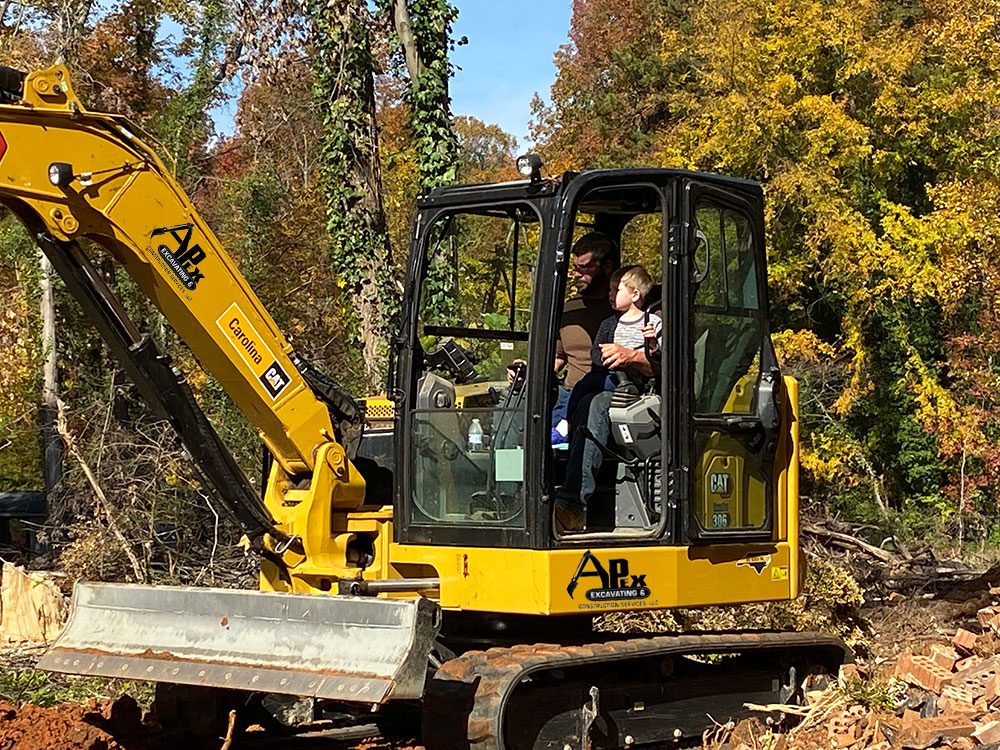
Coordinated site work demands more than just owning equipment. According to its own statements, the company has over 30 years of experience focused on residential and commercial site development, excavation, and grading. That background can matter when you are deciding how much work to take on at once. A contractor who routinely manages multiple stages of site work is better positioned to explain how each piece affects the others and whether full site development fits your project. While experience alone is not a guarantee, it is a useful proof point to combine with your questions about scope, process, and responsibilities.

Breadth of services as an indicator of project fit

Available information confirms that the company handles land clearing, grading and leveling, drainage solutions, underground utility installation, and broader site development for both residential and commercial customers. For you as a property owner or developer, this breadth means one provider may be able to look at the whole picture instead of treating each task in isolation. When you ask your questions about end state, responsibilities, and timing, a contractor who regularly delivers complete preparation for build‑ready sites can show how each service will contribute to your specific goal. That helps you see whether an integrated site development approach is warranted or if a more limited service from that same provider will meet your needs.

Local track record in Greensboro and the Triad

The company serves residential and commercial customers in Greensboro, Forsyth County, and throughout the Triad area, coordinating excavation and related site work from its North Carolina base. That local orientation means recommendations are shaped by familiarity with area site conditions and regional regulatory requirements. When you bring them your answers from this guide, you can expect the conversation to account for how your property’s conditions intersect with those regional norms, rather than with assumptions from a very different location. This can help refine whether full site development is warranted on your particular piece of land.

Main website image
Main website image
Local context · Stokesdale, NC

How Triad conditions shape your site development decision

Apex Excavating & Construction Services is based in Stokesdale, NC, and serves residential and commercial properties in Greensboro, Forsyth County, and the broader Triad. That means site development decisions on local projects are made in the context of this specific region. When you work through the questions in this guide, add a local lens: how easy it is for equipment to access your property, how your schedule lines up with typical weather in the area, and whether your project must account for any local regulatory or utility‑coordination steps. Bringing those details, along with your answers about scope and timing, to a contractor that regularly handles excavation, grading, drainage, and underground utilities in the Triad makes it easier to see whether you need full site development or a more limited phase of work.

Questions worth asking

Site development questions people often ask next

As you test whether site development fits your project, new questions naturally come up. These answers expand on issues that have not yet been covered directly in this guide.

What exactly is included in site development compared to basic excavation?

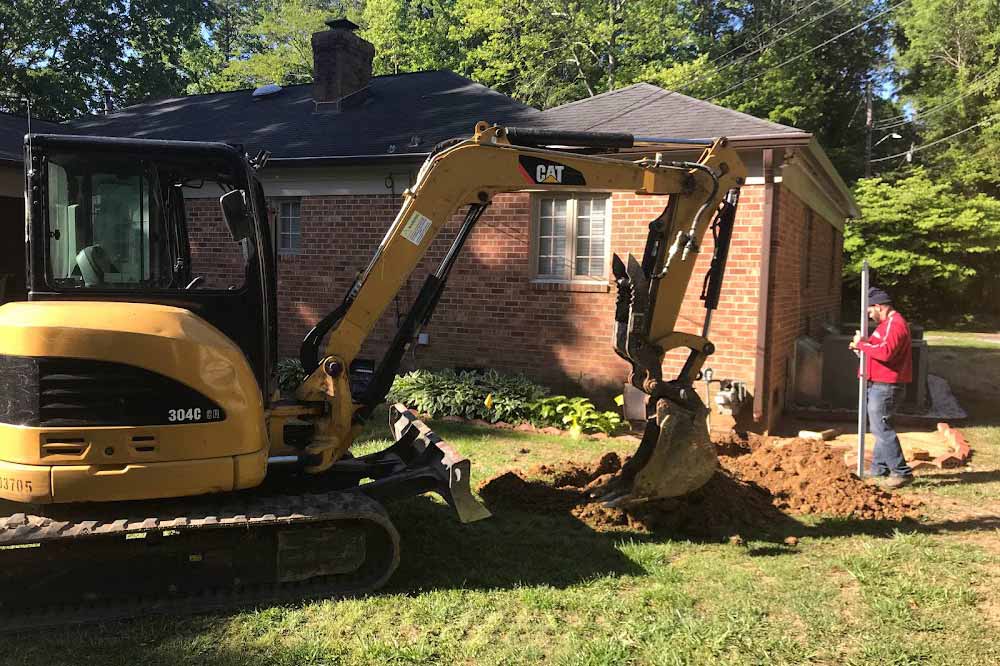
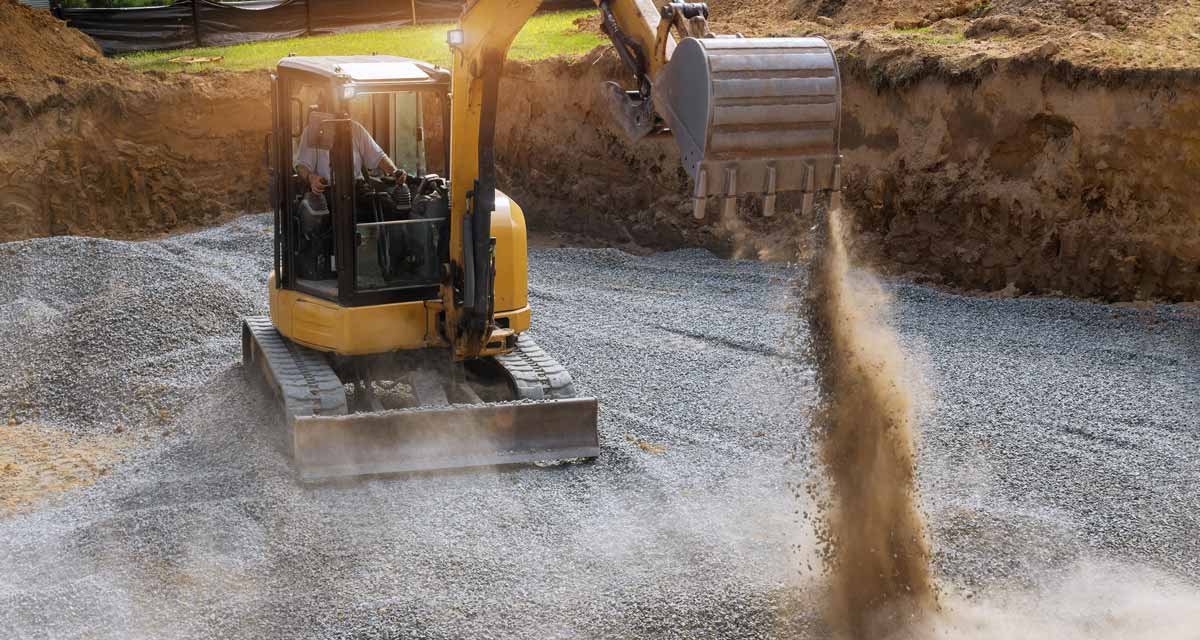
Site development usually refers to preparing a property so it is ready for construction, not just moving dirt. That often involves coordinating several types of work such as clearing trees and brush or removing old structures, rough and fine grading to establish proper elevations, shaping drainage to move water away from the building area, trenching and installing underground utilities like water and sewer, and sometimes establishing access such as temporary drives. Basic excavation might cover only one of those items, for example digging a foundation or a single trench. Your earlier answers about end state and current site conditions should guide whether you need the fuller bundle of work or a smaller, focused excavation task.

How do I know if drainage work should be part of my site development?

Ask yourself two sets of questions. First, what does water do on your property now? Do you see standing water after storms, channels cut into slopes, or soft ground near where the building, driveway, or parking will go? Second, how will construction change water flow? Adding roofs, driveways, and compacted soil concentrates runoff in new ways. If your answers point to uncertain or problematic water behavior, it is wise to treat drainage as an explicit part of site development rather than assuming grading alone will solve it. A contractor can then plan grading and drainage together, rather than leaving you with puddles or erosion after the main build is complete.

Can I hire different contractors for clearing, grading, and utilities instead of one site development contractor?

You can, but it changes what you must manage. Splitting work between multiple contractors can make sense if the scopes are small, your schedule is very flexible, or you already have trusted providers for certain tasks. However, you will then be the one responsible for coordination: making sure clearing leaves the right trees and access, grading matches the building plans, utilities are placed at correct depths and locations, and each contractor understands what the others have done. If your answers to the earlier questions show a complex project with tight timing or limited access, hiring one contractor for integrated site development can reduce gaps and finger‑pointing between trades.

What if I am still waiting on building plans—can I decide about site development now?

You can start gathering information and asking questions, but committing to full site development without at least a basic building layout is risky. Without knowing exactly where the structure, driveways, and utilities will go, it is easy to clear or grade areas that will not be used, or place utilities that must later be moved. Use this time instead to answer the broader questions in this guide about end state, site conditions, constraints, and timing. Share that picture with a contractor and ask what information they would need from your designer or builder before finalizing a site development scope. That way you will be ready to move quickly once plans are available, without locking into guesswork.

How should I compare site development quotes once I decide I need the service?

Once you are confident that site development is appropriate, line up quotes against the same written definition of your end state and site conditions. Confirm that each proposal describes the same areas of the property, the same combination of clearing, grading, drainage, and utilities, and the same finished condition you expect. Check who is responsible for permits, debris hauling, utility coordination, and any restoration after work. Ask how each contractor handles surprises such as hidden rock, soft soils, or undocumented utilities. The most useful quote is not just the lowest number; it is the one that clearly explains, in writing, how your specific site will move from its current state to the build‑ready condition you described earlier.
Your next step

Ready to talk through your answers with a local pro?

If your questions point toward site development but you still feel unsure about scope or timing, a focused conversation can help. Apex Excavating & Construction Services provides land clearing, grading, drainage, and underground utility work for residential and commercial properties from its base in Stokesdale, serving Greensboro and the broader Triad. When you call 336-314-0272 or reach out through the contact page, be ready to share your notes from this guide: what you plan to build, your target dates, site photos or a survey, and where you still have open questions. From there, you can explore whether full site development, a phased approach, or a smaller scope best fits your land and project.

Main website image