Site development under real-world deadlines

Choosing Site Development When Timing Is Critical

If you have permits ticking, a builder waiting, or financing on a clock, you cannot afford vague promises about “getting you on the schedule.” This guide explains how timing for site development really works, what information contractors need before they commit to dates, and the questions to ask so land clearing, grading, drainage, and utilities line up with your construction start instead of pushing it back.

Main website image
The short answer

What matters most

When timing matters, confirm availability, required lead time, decision deadlines, dependencies, and your own responsibilities early. Start by asking each site development contractor about their current availability and how much lead time they require between a signed agreement and mobilizing to your site. Request a written sequence of work with estimated start and finish windows for major tasks and any prerequisites—such as drawings, approvals, or site access—that must be in place first. Finally, make sure both your responsibilities and theirs are written down so everyone can see what might delay progress and how schedule changes will be handled.

Treat site development as a sequence of linked tasks—clearing, grading, drainage, and utilities—each of which must be timed correctly to support your construction plans.
You can only get a realistic start date after a contractor has reviewed your site conditions, plans, and permit status and checked them against existing commitments.
Written sequence, schedule assumptions, and clearly stated responsibilities on both sides reduce misunderstandings and protect your deadlines.
Using one Triad-based contractor for related site preparation services can make it easier to coordinate timing across the different stages of work.
Early, honest conversations about what might delay work allow you and your contractor to plan around schedule risks instead of reacting to them.
Main website image
A useful way to think about it

How site development timing really works

Site development is more than “show up and start digging.” Behind every start date are dependencies, decisions, and local conditions. Understanding these pieces makes your schedule conversations with a contractor much more productive.

1. See site development as a sequence, not a single task

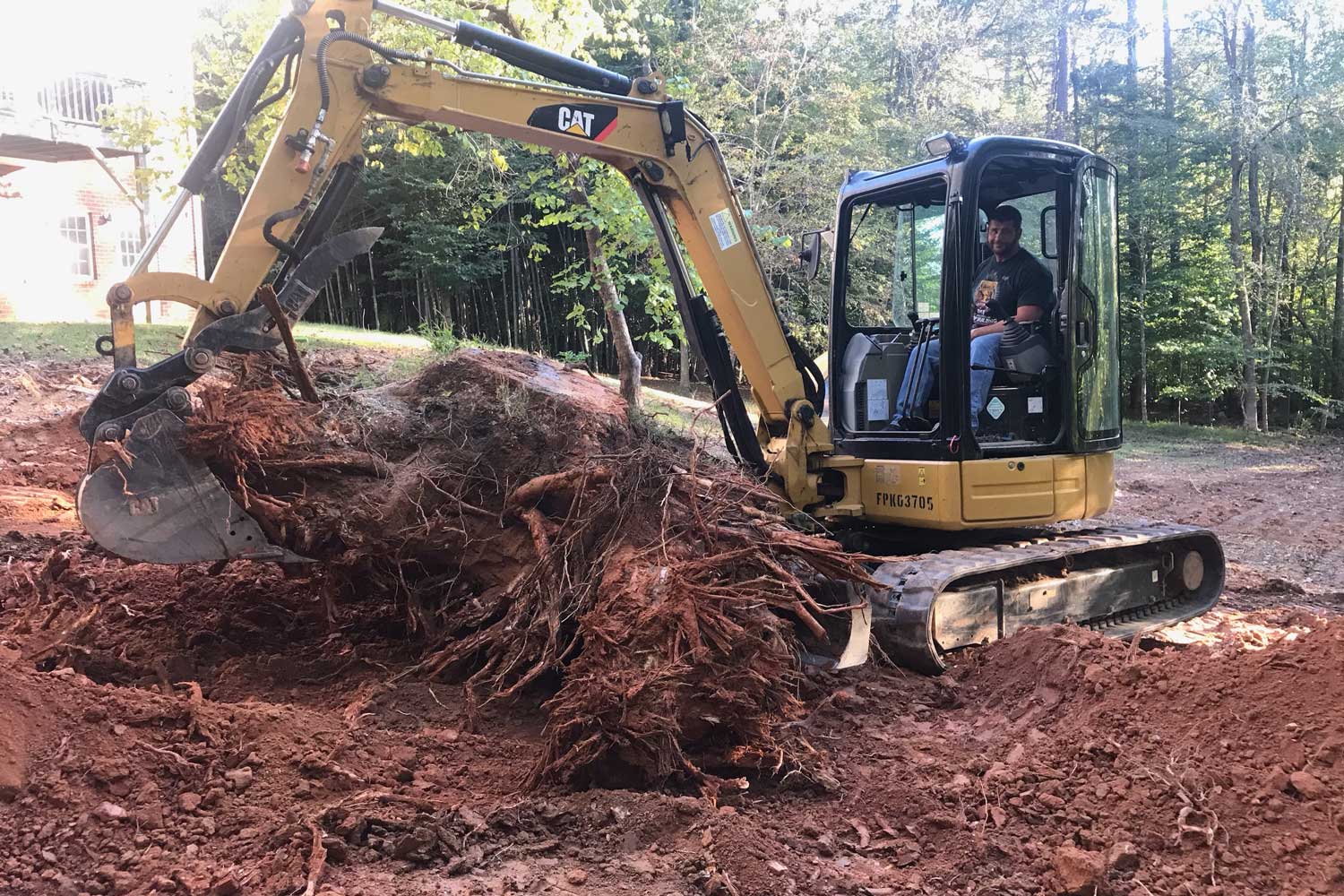
Site development is really a chain of tasks that must be done in the right order: land clearing, rough grading, drainage improvements, utility trenching and installation, and final shaping for a build-ready surface. Each step depends on the one before it and feeds into broader construction activities like foundation work and driveway construction. When timing matters, you want a contractor who explains how they will sequence this work for your specific property rather than offering a single “start date.” Ask them to walk you through the order in which they clear, grade, install utilities, and address drainage, and how long each stage typically takes for projects similar to yours.

2. Understand what drives realistic start dates

A contractor cannot give a dependable start date without certain pieces in place. They need to know the site address, basic layout, and what you plan to build, along with any permits or approvals that affect when work can begin. They will also look at crew and equipment availability across other jobs in their schedule. If you push for a date before they have reviewed your site conditions and plans, the date is more of a guess than a commitment. A better approach is to ask, “What information do you need from me to set a reliable start window, and how far out are you currently scheduling projects like this?”

3. Recognize common schedule dependencies

Even when a site development contractor is ready to work, other factors can hold up progress. Designs may still be in flux. Surveys or property pins could be missing. Existing structures might need demolition before grading can start. Underground utility routes might depend on final building and driveway locations. Weather and soil conditions can also limit what can be done on certain days. Instead of being surprised, ask your contractor to list all dependencies they see for your job. Then you can organize drawings, approvals, and any prerequisite work so you are not the one creating delays once a crew is available.

Decision guide

Turning timing pressures into clear contractor questions

Once you understand what drives schedule, you can interview contractors in a focused way. Instead of asking for a fast start in general terms, you can ask specific questions about availability, sequence, and risk so you can choose with confidence.

Clarify your real deadlines and flex points

Before you talk to any contractor, separate fixed deadlines from preferences. A fixed date might be a permit expiration, a builder’s scheduled foundation start, or financing conditions. Preferences might include wanting the yard usable by a certain season or hoping to avoid work during holidays. Write these down. Then, during your conversations, share the fixed deadlines first and ask whether they can be met given their current workload. Follow up with, “What would need to go right—and what could go wrong—for us to hit that date?” The way a contractor answers will show how carefully they think about schedule risk.

Ask each contractor for a written sequence and schedule assumptions

A dependable site development schedule is more than a single line on a calendar. Ask each contractor to provide a written outline of the work they will perform on your property and the approximate timing for each phase. That outline should note key assumptions, such as having clear site access, drawings provided by a certain date, or utility coordination handled through your project team. Compare how different contractors handle this. A thoughtful sequence with stated assumptions is more trustworthy than a bare promise that they can “get you in next month” without explaining how or under what conditions.

Test how they handle schedule changes and communication

Even with planning, weather and real-world conditions can shift dates. The quality of your experience will depend on how a contractor manages those changes. During the decision process, ask direct questions: “If heavy rain delays grading, how will you adjust the rest of the schedule? Who will update me, and how often? What kinds of issues could trigger a change order or longer timeline?” Look for specific, calm answers rather than vague reassurances. Clear communication about timing—before and during the job—is often what separates a smooth project from a stressful one.

Confirm what you must do to avoid becoming the bottleneck

Your own tasks can quietly become the biggest schedule risk if they are not named up front. Clarify which approvals, drawings, utility decisions, or access arrangements you must provide and by when. Ask the contractor to put your responsibilities and deadlines in writing alongside theirs. For example, you might need to mark property corners, confirm final house or building placement, or coordinate with a utility provider. When both sides see these items listed, it becomes much easier to stay ahead of them instead of scrambling when equipment is already scheduled.

Evidence and expectations

Experience and services that support realistic schedules

Schedule promises mean more when they come from a contractor set up for the type of work and region you are in. Here is what is verifiably true about Apex Excavating & Construction Services and how that can matter for timing-sensitive projects.

Decades of focused excavation and site development experience

Apex Excavating & Construction Services has over 30 years of experience specializing in residential and commercial site development, excavation, and grading. That kind of track record gives them a practical sense of how long different stages of site work typically take and what information they need from you before they can commit to dates that make sense for your project.

Comprehensive site preparation services under one provider

The company prepares properties for construction through a mix of services that includes land clearing, grading and leveling, drainage solutions, and underground utility installation. Working with a single provider for these related tasks can make it easier to discuss how the full sequence will run on your property and how each step will affect your overall construction schedule.

Established Greensboro-area and Triad presence

Apex Excavating & Construction Services is a local Greensboro-area contractor based in Stokesdale, serving residential and commercial customers across the Triad, including Greensboro and Forsyth County. Because their work is already organized around this region, they are set up to discuss how timing for your site development fits with other local projects and how far in advance you should plan to secure a place on their schedule.

Main website image
Main website image
Local context · Stokesdale, NC

Timing considerations for site development in the Triad

In the Greensboro and broader Triad area, many projects rely on contractors who handle excavation and related site work across multiple nearby communities. That makes it important to ask how your project will fit into their existing schedule. Apex Excavating & Construction Services is based in Stokesdale and serves residential and commercial customers in Greensboro, Forsyth County, and the wider Triad. Because their equipment, crews, and planning are organized around this region, you can have a direct conversation about when they are working in your area, how far in advance they are booking, and how your requested dates compare to other local projects on their calendar.

Questions worth asking

Timing questions people ask about site development

Property owners and developers with hard deadlines tend to circle around the same concerns. These answers add detail beyond the main guide so you can set expectations before you call a contractor.

How early should I contact a site development contractor if my project has a firm deadline?

Contact a site development contractor as soon as you have a basic site layout, know roughly where the building or improvements will sit, and have a sense of your hard deadline. For many projects, that is months before you want excavation to begin. Early contact lets the contractor review your plans, discuss constraints, and place your project into their schedule while there is still flexibility. Waiting until a few weeks before you want work to start often leads to rushed decisions and fewer options if their crews are already booked around Greensboro and the wider Triad.

What information do contractors need to give a realistic site development timeline?

To give a realistic timeline, a contractor will typically want your property address, any available survey or drawings, a description of what you plan to build, and notes on existing conditions such as trees, slopes, structures, or known drainage issues. They will also ask about required utilities and where you expect them to run, plus any permits or approvals already in place. With that information, they can assess how much land clearing, grading, utility trenching, and drainage work is needed and how it fits into their schedule. If you only provide a general idea without these details, any dates discussed will be rough estimates rather than dependable windows.

How do land clearing, grading, drainage, and utilities interact with my builder’s schedule?

Site development sets the stage for your builder. Land clearing and grading shape the site and establish elevations. Drainage work helps direct water away from structures, protecting foundations and other improvements. Underground utilities must be installed and coordinated with the building location and driveway or access. Your builder generally cannot begin foundation work until these pieces are sufficiently in place. That is why it helps to connect your builder and site development contractor early so they can align on where structures will sit, how access will work, and when the site will be considered build-ready for the next stage.

What can delay site development after a start date is set?

Even after a start date is agreed to, a few common issues can slow site development: missing or changed plans, unclear property boundaries, unexpected underground obstacles, difficult access for equipment, and unaddressed drainage or soil problems. Weather can also pause grading or trenching work. To reduce surprises, share all the information you have about the site, make sure property limits are clearly marked, and ask the contractor what they see as the main schedule risks. Getting these concerns into the open before the job starts allows for backup plans instead of last-minute delays.

How can I keep my project moving if I am still finalizing design details?

If design details are still shifting, focus on locking in what does not change: property location, general building area, major access points, and whether new utilities and drainage improvements will be required. You can discuss with your contractor which early tasks can proceed without final finishes decided, such as basic land clearing or resolving clear drainage problems. Ask them to explain which decisions are safe to make now and which should wait for final plans. This approach helps you make progress on time-sensitive site work while avoiding rework that could result from major design changes.
Your next step

Need schedule-focused site development in the Triad?

If your project has a real deadline—not just a wish list date—you need a site development contractor who will talk plainly about timing, dependencies, and responsibilities. Apex Excavating & Construction Services prepares residential and commercial sites for construction with land clearing, grading, drainage, and underground utility installation across Greensboro, Stokesdale, and the broader Triad. Reach out by phone or through the contact form to discuss your plans, share your target dates, and find out what would need to happen—and when—to keep your project on track.

Main website image